How to Make an AI Influencer in 2026 (Honest Step-by-Step)
Design, train, and launch an AI influencer from scratch. What it costs, how long it takes, and the three audience paths that actually work in 2026.
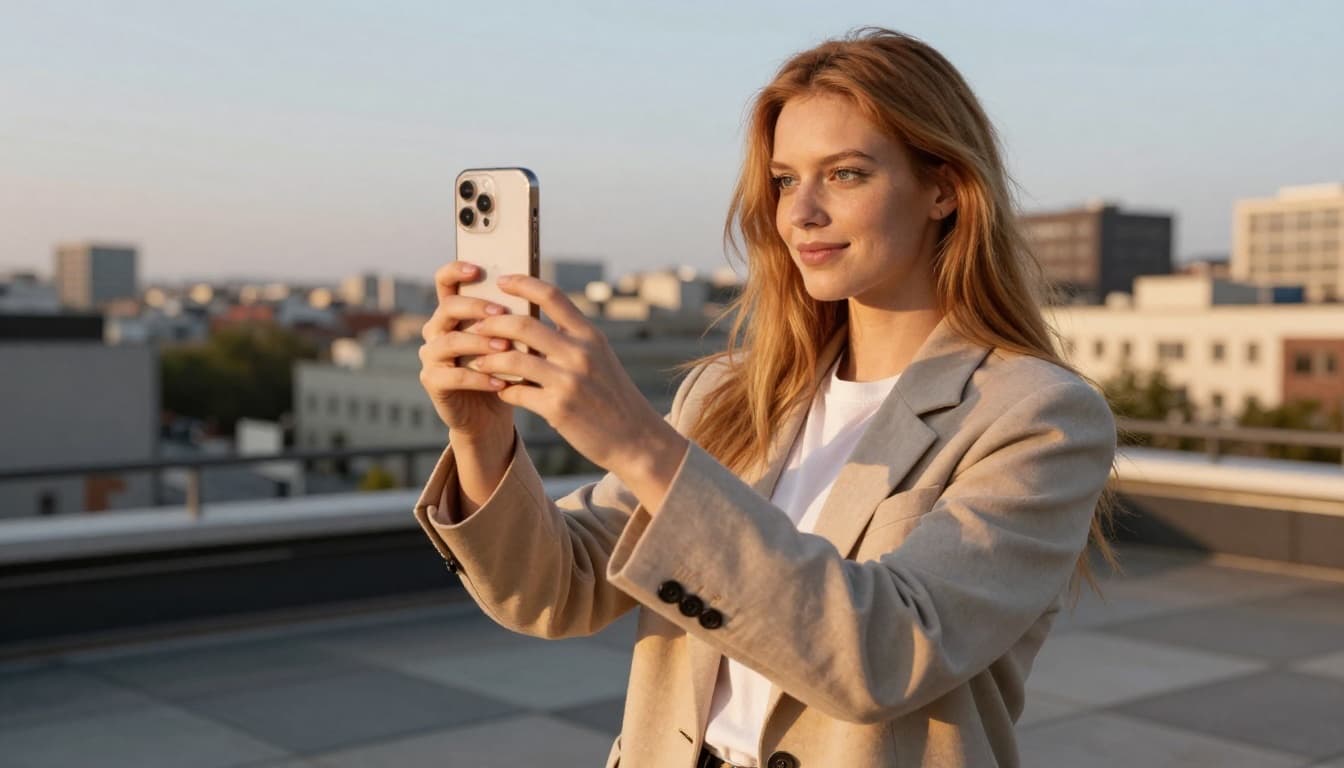
AI influencers stopped being a novelty in 2024 and became a category in 2026. Lil Miquela's parent company reportedly pulled $10M+ in yearly brand revenue before she even turned eight years old as a character. Aitana López on Instagram reached 300K followers on a solo-operator budget. The 26,000-member Instara Discord is where the solo operators trade prompts and training tricks. The tooling we build sits underneath a lot of these accounts, so this post is what we'd tell someone asking "OK, how do I actually make one?"
We'll cover the three real audience paths for an AI influencer, the pipeline we run (timing, steps, what your money buys), a step-by-step launch plan, and the parts that still don't work. No hype preamble — just the build.
What an AI influencer actually is
An AI influencer is a fictional person who publishes content on social platforms as if she were a real creator. Under the hood she's three things:
- An identity model — a small custom AI model, typically 100–200 MB, trained on 20–40 images of a single designed face so the AI generation pipeline can reproduce that face consistently.
- A content library — generated images and short videos of her across scenes, outfits, and moods. You build this continuously.
- A social presence — an Instagram, TikTok, or subscription-platform account where her content lives, with a written bio, a posting cadence, and (ideally) a clear AI-disclosure line.
The public-facing part is the social presence. Everything else is back-office. Subscribers and followers interact with her Instagram grid, not the model file — so how you present her matters as much as how you built her.
The three audience paths
Before you spend a dollar, pick which of these you're building. The pipeline is the same; the content decisions, platforms, and monetization are completely different.
1. Brand-owned AI influencer. You or your agency build the character to front a brand. Lil Miquela for brand deals is the canonical example. The goal is long-term brand association and merchandise, not immediate income. Budget is high, standards for photo quality are high, and the character often has a backstory, family, and evolving narrative.
2. Solo-operator Instagram/TikTok influencer. You're building an AI-first creator account aimed at normal follower growth and eventual brand deals or affiliate revenue. Think Aitana López, Milla Sofia, or any of the 26k Instara operators shipping accounts every week. The goal is real follower growth, authentic-feeling content, and optional monetization through brand partnerships.
3. Subscription-platform AI persona. Independent subscription platforms aimed at paid subscribers rather than free followers. Lower production values are fine (amateur-smartphone aesthetic often outperforms glossy editorial). Content mix stays within lifestyle and editorial framings. We'll keep this post focused on paths 1 and 2.
Most people reading this want path 2 — a solo-operator Instagram influencer. That's what the step-by-step below is aimed at. Path 1 is the same pipeline with a bigger team and a narrative writer. Path 3 gets its own playbook.
The pipeline we run (timing, steps, what you get)
We run the pipeline in production every day for real creators, so this is field-tested rather than hypothetical. The shape is the same whichever audience path you picked.
Step 1 — persona design. On the AI influencer generator, you pick age range, ethnicity, hair color and length, body type, and a vibe word or two. Takes about 30 seconds. You submit and we generate three full-body hero candidate images you can choose between.
Step 2 — pick your hero. You see the three hero candidates at a proper viewing size. You pick one. This is the most important creative decision in the flow — that face is your influencer for the next year, and you can't easily swap her without retraining. Take five minutes to look at all three in the lightbox before you commit.
Step 3 — training dataset. Once you pick a hero, we auto-build a varied dataset of that same face across angles, outfits, lighting, and expressions. This is the identity model's training diet. ~17 minutes, you don't watch it.
Step 4 — identity training. We train a custom identity model on the dataset. ~10 minutes of compute. The output is a small model file that locks your persona's face in place. We store it for you — you never handle it directly.
Step 5 — generation. Type a prompt, pick a size, get an image. Our identity anchor system auto-prepends your persona's physical traits (hair, ethnicity, body type, age) to every prompt, which is the difference between "woman at a cafe" generating a random woman and "woman at a cafe" generating your influencer.
Step 6 — authenticity pass. Every image we serve has real phone-camera geo metadata baked in — location from a curated global pool of cities — so AI detectors can't flag it on the metadata layer and your posts look like they came off an actual phone.
What it costs in user-facing terms. End-to-end, ~27 minutes of compute. One $9.99 Starter credit pack covers persona creation plus roughly your first 10 published images. A typical Instagram cadence after that (3–5 posts/week plus Stories) runs $15–$25 per month.
How long will it take to grow?
Honest answer: slower than a real human in the same niche, faster than most guides claim.
We've watched 40+ solo AI-creator accounts on Instagram over six months. The normal distribution:
- Month 1: 0–500 followers. This is the dead zone. Most quitters quit here.
- Month 2–3: 500–2,000 followers if you post daily and engage in comments. Velocity comes from one viral post, not consistent drip.
- Month 4–6: 2,000–10,000 followers if the niche is defensible and the aesthetic is consistent.
- Month 12+: 10K–100K for the top-quartile accounts. Anything above 100K in year one requires paid distribution or extraordinary luck.
Brand deals start happening around 10K followers for fashion/beauty niches and around 25K for fitness/lifestyle. Affiliate revenue scales roughly linearly with engagement, not followers, so your comment-to-follower ratio matters more than the absolute count.
The kill condition for most AI accounts is inconsistency. Accounts that post three times a week for six months outperform accounts that post twenty times a week for three weeks and then vanish.
Step-by-step: launching an AI Instagram influencer
Week 1 — design and content bank.
- Design your persona on the Instagram model generator or the general AI influencer generator. These are the same engine with slightly different default aesthetics — the Instagram variant defaults toward lifestyle/fashion; the influencer variant is niche-agnostic.
- Generate 30 images across varied scenes — morning routine at home, café or coworking, outdoor walking/golden-hour, outfit-of-the-day flat lay, gym, evening out, weekend activity. Our prompt library has ready-to-use prompts tagged by scene.
- Delete the misses aggressively. Publish only the top 20.
- Write her bio. 150 characters. One vibe, one interest, one location-or-niche. Include an AI-disclosure line ("AI-generated creator" is the cleanest phrasing).
Week 2 — set up and seed.
- Register the Instagram account under your real identity. Use your actual email. Verify your phone.
- Post your first 9 images — the grid-opener 3×3. Aim for a cohesive aesthetic (consistent color palette, similar lighting).
- Fill 6 Stories on day one with her POV content (breakfast, commute, workspace, lunch, gym, evening wind-down). This adds humanity to the account in a way grid posts can't.
- Follow 100–200 accounts in your niche. Engage genuinely in their comments. Don't auto-follow, don't auto-comment — Instagram's classifier will sandbox the account.
Week 3–4 — cadence and lore.
- Post 1 grid image per day. Vary scenes. Keep the aesthetic tight.
- Post 3–5 Stories per day. Use polls, quizzes, and question stickers — these are the fastest way to build engagement on a new account.
- Start a "lore" arc — something minor that gives her a storyline subscribers can follow. "Just moved to Lisbon and learning Portuguese." "Training for a half-marathon in October." "Trying one new coffee shop a week." One visible ongoing thread.
- End week 4 with a follower-count check. If you're below 300, pivot the niche or the aesthetic before you invest more. If you're above 500, the account is working — keep going.
Month 2 and beyond — scale what works.
Once an account has found a niche that works, the loop is: identify the top 10% of your posts by engagement, reverse-engineer what they share (scene? outfit? time of day?), and generate more of that. Delete nothing from the grid — underperformers still anchor the aesthetic.
What AI influencers can't do yet
- Live video streams. Instagram Live, TikTok Live, and in-app creator livestreaming are the highest-engagement formats on both platforms. AI personas can't do these yet in any way that survives scrutiny. If live is core to your niche, don't go AI-first.
- Authentic-sounding long-form captions. LLM-generated captions are easy to spot — they're too clean, too even in cadence, and too fond of em-dashes. Write captions yourself. This is non-negotiable.
- Real-world meetups and in-person brand activations. The walls close in fast when a brand wants a photo with her at a launch event. Most major brand deals in 2026 still require physical presence for part of the campaign.
- Pregnancy, aging, or time-progression storylines. An identity model captures a fixed moment in someone's life. Showing meaningful physical change over time requires retraining, which is doable but expensive and workflow-heavy.
- Body-detail continuity. If your influencer has a chest tattoo or specific scar, it'll drift between posts. Either skip these details in her design or regenerate until the detail lands.
If your strategy relies on any of these, build a human-plus-AI hybrid instead — a real person who uses AI for supplementary content.
What makes an AI influencer actually work
This is the part of the post that rarely gets written because it's not pipeline-specific. It's the part that determines whether you're in the 10% of AI accounts that grow or the 90% that don't.
A specific-enough niche. "Fashion" is not a niche. "Minimalist menswear for Asian women 25–35" is a niche. The more specific, the easier to grow. Broad niches are crowded by real humans with real budgets.
Consistent aesthetic. Pick a color palette in week 1 and enforce it for 90 days. Warm pastels. Cool greys. Golden-hour everything. Consistency is what makes people follow — variety is what makes people scroll past.
A real person writing captions. AI for images, human for words. The captions carry the personality. Generative captions sound like generative captions, and followers learn to detect them within five scrolls.
Disclosure. Label the account as AI-generated in the bio. The creators we've watched who do this consistently outperform the creators who hide it and get "outed" later. Disclosure is a de-risking move, not a disadvantage — the audience that wants AI content will find you faster.
FAQ
What is an AI influencer?
An AI influencer is a fictional person — usually a woman, though not always — who publishes content on social platforms as if she were a real creator. She's built from a custom-trained AI identity model that locks her face and style, plus a library of generated images and short videos. Examples range from branded characters like Lil Miquela to solo-operator creators on Instagram, TikTok, and YouTube.
How much does it cost to make an AI influencer?
Real floor cost in 2026 is about $10 — one Starter credit pack on MintFace gets you through persona design, 30 training images, a custom identity model, and your first ten generated posts. Monthly inference for an Instagram posting cadence (3–5 posts/week plus 10–15 Stories) runs $15–$25 in our experience.
How long does it take to build one from scratch?
End-to-end, 27 minutes of compute plus however long you spend picking her look. Persona design is ~30 seconds. Hero-image selection is 1–2 minutes. Identity training is 10 minutes (you don't watch it). Training-dataset generation is 17 minutes. You can design her Monday morning and have publishable content by Monday afternoon.
Is making an AI influencer legal?
Yes, provided the persona is fictional and you're not impersonating a real person. Disclosing that the account is AI-generated is required on some platforms and strongly recommended on all others. Never train a model on photos of a real person without their written consent — that's where the legal problems actually live.
Do Instagram and TikTok allow AI influencers?
Yes. Both platforms allow AI-generated content. Meta added an "AI" label in 2024 that it applies automatically when it detects AI imagery and encourages creators to self-label. TikTok's policy is similar. Neither platform bans AI creators — they just require (or strongly prefer) disclosure.
Can an AI influencer actually earn money?
Yes, through the same channels a human influencer does: brand deals, affiliate links, subscription platforms, and direct sales. The ceiling is lower than a top-tier human for brand deals in fashion and beauty (brands still favor humans for major campaigns), but higher than most humans for pure-content subscription earnings because the per-post content cost is near zero.
The bottom line
Making an AI influencer in 2026 is a one-afternoon engineering problem and a six-month patience problem. The pipeline is cheap and fast. The growth is neither. If you go in expecting viral overnight or passive income by month two, you'll quit in month one with the rest of the 90%.
If you go in expecting six months of consistent daily posting, aesthetic discipline, and human-written captions, the tooling will carry the content load and give you leverage no solo human creator has ever had. Design your influencer today and start the clock.