Best AI Influencer Generator 2026: An Honest Comparison
We compare 11 AI influencer generators on the thing that actually matters: how each one keeps a character's face consistent. Verified pricing, real limits, and who each tool is genuinely for.
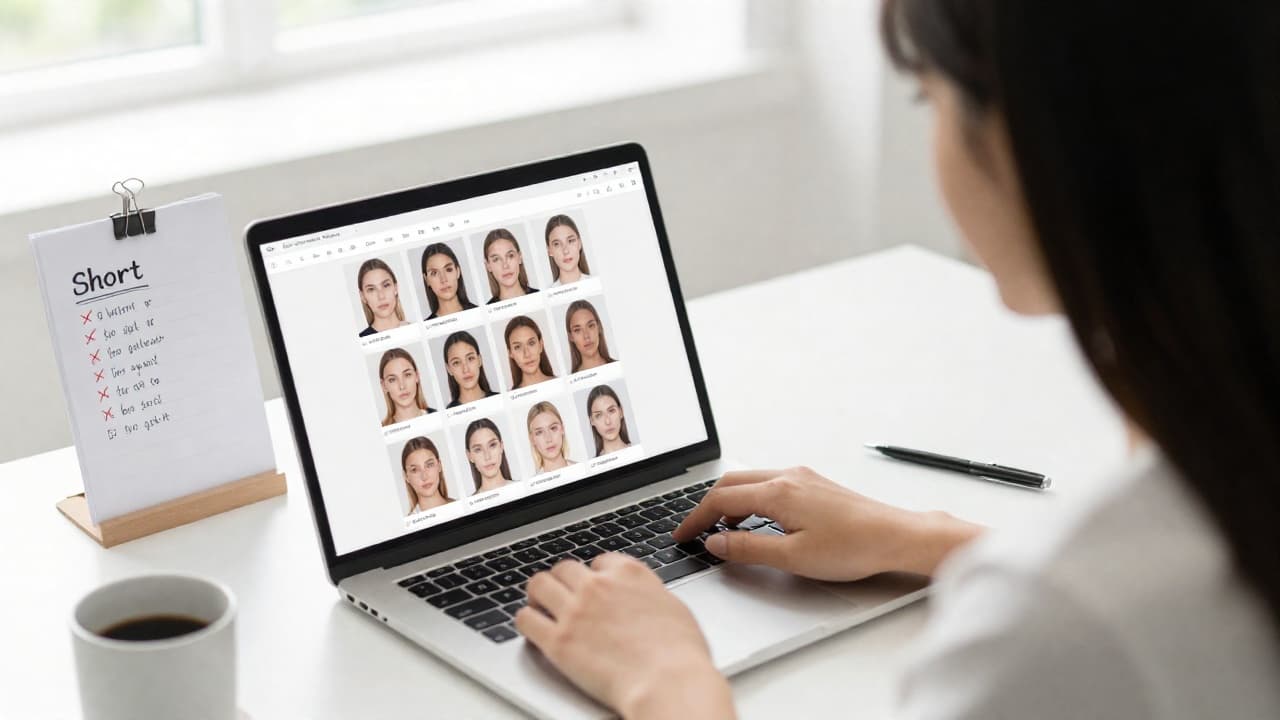
Every tool in this category promises a "consistent character." Almost none of them tell you how — and that one detail decides whether post 100 looks like post 1, or like a stranger.
This is a straight comparison of the 11 AI influencer generators creators are actually choosing between in 2026: what each one does underneath the marketing copy, what it really costs (we only quote prices we could read on the vendor's own site), and how each keeps a face the same across a whole feed.
We build one of them, and we built it around exactly that problem. MintFace trains a model on your character instead of pasting a reference photo onto every render, so one face carries everything you post — stills and video, any outfit, any city, for as long as you keep posting. If you are building a persona you will run for months rather than generating a single picture, that is the difference that decides it, and it is why MintFace may be exactly the right call for you.
The only question that separates these tools
Every one of these products promises a "consistent character." The promises are not equivalent, because there are three fundamentally different ways to keep a face the same, and they intervene at three different places in the system.
1. Train a model on the character. You give the tool a set of images of one face and it spends real compute learning that specific person. What comes back is a durable asset — it knows that face well enough to draw it from angles no source photo ever showed. This is the slow option, and the only one where the character is properly yours afterwards.
2. Re-use one reference photo on every generation. No training step. The tool holds a single photo and re-applies that face each time it draws. It's instant, which is why the fastest tools in this category all work this way. The cost is that nothing is ever learned: every new pose, angle and lighting setup is a fresh guess from the same one picture.
3. Prompt description or seed re-use. Describe the same person every time, re-use a seed, hope. Even the model vendors concede the ceiling here — Google DeepMind's own Gemini 3.1 Flash Image model card lists under known limitations, verbatim: "Character consistency is not always perfect between input images and generated outputs." When the company that ships the model says that, believe it.
This is not a theoretical distinction. Jakob Nielsen, co-founder of Nielsen Norman Group, tested persistent characters across several tools and documented a character whose hair colour changed between prompts — on a product that advertises persistent avatars as a headline feature.
And training is not strictly better. A model trained on a narrow set of images absorbs the circumstances of those images along with the face — train a character only in studio light and it will fight you when you ask for a night market. Anyone telling you training wins every time is selling training.
Why this breaks on video, specifically
Images forgive a lot. Video does not, and the reason is structural.
A face swap works one frame at a time. Frame 100 has no idea frame 99 existed — each frame gets its own independent guess at where the face is and what it should look like, and those guesses don't have to agree with each other. That's why swaps flicker and melt precisely when the body moves: head turns, changes of expression, a hand crossing the face. All the motion people actually post.
Video generators that start from a single photo have a different problem with the same result. Each frame is built on the one before it, so a small error in frame 2 gets inherited by frame 3 and amplified by frame 20. The face drifts away over the length of the clip.
So when a tool says "consistent character" and you're planning to post Reels, ask specifically what happens across a clip. We wrote up why one-photo swaps melt on motion separately if you want the longer version.
The comparison
Everything below was read on the vendor's own site in September 2026. Where a company doesn't publish a price on a page we could actually load, we say so rather than repeat a number from someone else's listicle.
| Tool | Identity method | Published price | Free tier |
|---|---|---|---|
| MintFace | Trained model per character | $9.99–$129.99 credit packs, no expiry | Ready-made persona + 5 image credits, no card |
| Apob AI | Trained model from one reference image | Not on a public page (404s) | 80 credits/day, advertised on homepage |
| The Influencer AI | Trained clone from 8–12 selfies; trait-built personas not disclosed | $19–$199/mo | 3-day trial, 10 credits, card required |
| Imagera | Trains a model, and says so plainly | $16.66–$41.66/mo billed annually | None for core generation |
| Higgsfield | Two methods — Soul ID trains; the AI-influencer funnel teaches single-image anchoring | Not on a readable page | Yes, documented in help centre |
| ZenCreator | No training step — saved prompt, seed and face swap | $19.99–$499 one-time credit packs | None advertised |
| Fannabe | Not disclosed | Not on a public page (404s) | Yes, per its own FAQ |
| Glambase | Not disclosed anywhere on site | $5.99–$14.99/mo by commitment | Not listed |
Four things in that table are worth saying out loud.
Half this category won't show you a price. Fannabe, Apob AI and Higgsfield all route pricing through pages that 404 or render client-side with no readable plans. Argil's pricing page returned "Loading plans…" and nothing else; its prices are published in its docs instead. If you can't compare cost without creating an account, that's a deliberate choice.
"Consistent" is frequently undefined. Glambase markets itself as an AI influencer platform and states no consistency mechanism anywhere on its site. Fannabe claims "100% consistent, same face and body" and discloses no method. A claim with no mechanism behind it is a claim you can't evaluate.
ZenCreator is honest in a way worth crediting. Its own page describes the workflow plainly — save your prompt, seed and style presets from a good generation, then reuse them with face swap. No training step, and it says so. That's more useful to a buyer than an undefined 100% claim.
Higgsfield sells both methods and funnels you to the weaker one. Its Soul ID feature genuinely trains a reusable identity. But its AI-influencer landing page teaches the single-image anchoring route — "it all starts with just one perfect shot." If you go there, ask for Soul ID by name.
Tools that are solving a different problem
Four tools appear constantly in these listicles and shouldn't, because they're built for a different job. Including them pads a list; it doesn't help you choose.
HeyGen ($0–$149/mo) makes script-driven talking-head video from an avatar, and it's very good at it — 1,100+ stock avatars, voice cloning, 175+ languages. It meters video minutes, not images. If you want a spokesperson reading a script, this is the category leader. It is not a tool for building a fictional social persona that posts photos.
Argil ($39–$149/mo per its own docs) builds a clone of you from a roughly two-minute self-recorded video. Its own blog draws the line explicitly, separating "fully synthetic AI influencers" from "AI clones of real humans." It's the clone. Someone real has to agree to be the face.
Pose AI ($4.99 first week, then $14.99/week) is a consumer selfie app on iOS and Android — AI photos and video of you, from your selfie. Its own pricing FAQ confirms there's no free tier. Great at its job, but the persona is your own likeness, not a character you own.
Creatify ($0–$99/mo) is a performance-advertising platform for brands — product ads, UGC-style spots, an ad cloner. Custom avatars are gated to the $99/mo Pro tier and capped at three.
Imagera sits at the boundary. It genuinely trains a model per character and says so plainly on its own site, which we respect — most of this category won't tell you either way. But on its own published numbers the $16.66/mo Starter plan grants 400 credits a month while training one model starts at 500 — so the entry plan cannot complete a single character. Budget for Pro if you go this route.
The part every list in this category leaves out
Here's the uncomfortable finding, and it changes what "best" should even mean.
The pitch under all of this marketing is that you build an AI influencer and brands pay you. That market is contracting. Digiday, working from Collabstr transaction data across hundreds of campaigns, reported in September 2025 that the share of brands willing to include AI creators in campaigns fell from 86% to 60% in ten months, and that brand partnerships with AI accounts dropped roughly 30% year over year. Lil Miquela, the category's flagship, lost about 141,837 followers in a year.
There's reputational risk attached too. When Vogue's August 2025 Guess advertisement used an AI-generated model with a small disclaimer, the TikTok surfacing it passed two million views and the backlash ran for weeks.
Direct monetization has held up much better. Aitana López, created by Spanish agency The Clueless, earns through a supplement brand and a Fanvue subscription — Euronews reported up to €10,000 in a peak month and around €3,000 on average. Real money, and an order of magnitude below what the listicles imply.
One note on numbers, since you'll meet them everywhere: the market-size figures that circulate in this niche — "$11.74 billion," "$154.6B by 2032" — trace back to content farms with no stated methodology. We're not repeating them. Even the reputable firms disagree by a factor of four.
What this means practically: if your plan is brand deals, you're entering a market that's tightening, and you should weight tools toward volume and speed. If your plan is direct monetization — a subscription audience, your own products — you should weight toward owning a durable character and being able to put that character anywhere. Those point at different tools.
The compliance layer nobody in this SERP mentions
We read the five top-ranking pages for this query. Not one covers disclosure obligations, despite the entire premise being that you post this content to platforms that regulate it.
This matters more than the feature grid, because it's what actually ends accounts:
- Instagram applies AI info labels and requires disclosure for photorealistic video and realistic audio — details in our Instagram AI content policy breakdown.
- TikTok requires AI-generated content labeling, covered in our TikTok AI policy guide.
- Fanvue has a defined AI-creator disclosure workflow and treats AI personas as a recognised category — see the Fanvue AI policy.
- OnlyFans anchors AI content to the verified account holder's own likeness, which is a meaningfully different rule — see the OnlyFans AI policy.
No generator does this for you. If you're deciding where to publish, we compared the two subscription platforms directly in Fanvue vs OnlyFans for AI creators.
Where MintFace fits
We train a model on your character. That is the whole product, and it is the part that holds.
You describe a look, pick your favourite from a set of hero candidates, and that face becomes a permanent asset on your account. Not a photo we paste onto each new render — a character the model has genuinely learned, which is why it can render them at angles and in lighting no source image ever contained.
The difference shows up exactly where the alternatives come apart: at image 200, and at second 8 of a clip. One face carries your whole feed — stills and video, new outfits, new cities, new seasons — with nothing to re-upload and no per-shot setup. Train once; everything after it is instant.
And because your character is generated rather than swapped in, you are never limited to footage you already have. Put them somewhere you have never been, in an outfit you do not own, on a day that never happened. A paste-the-face tool needs a source image to work on. A trained character doesn't.
The character is also yours. Personas can be male or female, every one of them is fictional and built from a description — no real person's likeness, ever — and you hold full commercial rights to everything you generate.
Pricing is pay-as-you-go: $9.99, $39.99 and $129.99 credit packs, no subscription, and credits that never expire. One image is one credit; video is four credits per second. Every new account starts with a ready-made trained persona and five image credits, no card required.
How we'd actually choose
- A fictional character you own, posting daily, monetized directly → a tool that trains per character. MintFace, Apob AI, Imagera, or Higgsfield with Soul ID specifically.
- You, on camera, at scale, in many languages → HeyGen or Argil. Not a persona tool at all, and much better at that job.
- Testing the idea this week for as close to free as possible → Apob AI's daily free credits, or Fannabe's free plan.
- Explicit content or an agency roster → Fannabe and ZenCreator both market to that use case openly. MintFace's public product doesn't serve it — our content policy permits lifestyle, portrait, editorial and light-erotic work and prohibits explicit material.
- One-off images where the face needn't repeat → almost anything, including free general-purpose image tools. Don't pay for persona infrastructure you won't use.
The question worth asking any vendor before you pay: does this train something per character, or re-derive the face each time? Most of them won't answer it on their marketing page. That silence is itself information.
Related reading
- How to make an AI influencer in 2026 — the honest step-by-step, start to first post
- AI character swap: put your persona in any video — why one-photo swaps melt on motion
- Fanvue vs OnlyFans for AI creators — where to publish, compared
- Prompt library — curated prompts for persona photography